 H
H
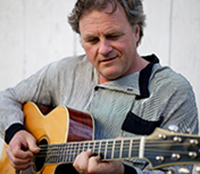


Harvey Reid Musical BioThis is biographical information for journalists who want it, and who think that there is perhaps some necessary link between an artist's childhood and their art. Harvey Reid was born in the high desert of rural California in 1954, and after living in New Mexico and Michigan as a young child, he was raised in the music-rich Washington D.C. area, the 4th of 6 children in a non-musical family. Both his parents were teachers, and his mother's love of folk and classical music added to the 1960's music he was hearing on Top 40 radio. He first took up recreational folk guitar at about the age of 14, and played at parties and local coffeehouses with his friends. He began writing songs right away, as well as playing and singing traditional music, and folk and rock popular songs of the day, with no plans whatsoever to become a musician. He credits the now-legendary WHFS Radio in Bethesda MD with introducing him to a lot of roots American music, since they were a shining example of a progressive FM radio station with a large record collection of blues, bluegrass and folk music that had a number of very educated DJ's playing whatever they wanted to 24 hrs. a day. Reid recalls listening to hours and hours of the music, absorbing vast amounts of music, and of researching American acoustic music at the local libraries and record stores. At the age of 18 Reid started to play guitar seriously, and quickly became absorbed in the music of all the skillful pickers of the day. Reid began jamming with bluegrass legends (mandolinist) Buzz Busby, (bassist) Jack Stoneman and (banjoist) Johnny Snyder while playing street music as a teenager with his friends, and attended local coffeehouses and open mikes which featured the rich DC acoustic music scene. When he decided to pursue acoustic guitar playing seriously, he began attending local concerts and bluegrass festivals in MD, VA, PA and NC, where he fell in love with bluegrass and old-time music. This is when he began playing autoharp, and began vacillating between playing flatpicked or fingerpicked guitar, something he still does 45 years later. For a number of years he played street-corners and open mikes in the DC area and hitch-hiked around the country, playing music everywhere he went, while studying the music of the new masters of the steel-string guitar: Doc Watson, David Bromberg, Norman Blake, John Fahey, Leo Kottke, John Hurt among others. He also was a follower of the songwriting of Bob Dylan, Eric Andersen, Jesse Winchester, Gordon Lightfoot, Paul Simon, and John Prine, and made himself aware of most of the influential figures in American acoustic guitar music. In 1971 he enrolled at the University of Maryland to study abstract mathematics and French. Being from an academic family, he was expected to go to college, and did so. He graduated Magna Cum Laude in 1974, and spent the summer of 1974 traveling to bluegrass festivals and playing music constantly. He attended graduate school at the University of Wisconsin in the Fall of 1974 for a few weeks before quitting school to play music. He has made his living entirely as a musician since that time. In 1975 Reid obtained a Dobro, and in 1976 Reid took a job teaching folk guitar at the University of Maryland, and bought his first mandolin. In 1977 played his first paid gig at a bar in Washington D.C. That summer he formed the Harvey Reid Band, and toured New England, playing guitar, fiddle, banjo, and mandolin in the resorts and taverns. He ran a very successful open mike and music showcase there for several years. In 1979 he quit teaching and moved to Portsmouth, New Hampshire to play the "blue-collar folk circuit", and he still lives in that area. Reid moved to Nashville in the winter of 1979, founded the Third Hand Capo Company, and published "A New Frontier in Guitar" a book that is the first documented work on the partial capo (and may well be the first desktop-published book in the world), which Reid pioneered. He went back to DC in 1980 for a stint to play Telecaster, banjo and fiddle with a country-rock group called The Rainbow Riders in Northern Virginia. At this time he wrote the 320-page Modern Folk Guitar, which was to become the first college textbook for folk guitar. It was published in 1980 by Random House, and remained in print until 2014. Reid recorded his first LP, Nothin' But Guitar at TRACK studios in Silver Spring MD in 1982 after winning the 1981 National Fingerpicking Guitar Competition in Winfield Kansas. In 1983 he moved to New Hampshire again and began focusing on his own music, and began releasing a series of recordings that have brought him increasing attention in the acoustic music world. In 1989 his CD Solo Guitar Sketchbook launched his career as a national artist. He now lives in York, Maine with his family, and travels across the country and abroad to perform at concerts and festivals. Since 2009 he has slowed down touring to be with his family, and has been managing a web store at www.PartialCapo.com and publishing a very ambitious series of music education books, that now number almost 30. |